

Update on the Field Visit with the Department of Natural Resources - June 2026

At the initiative of the New Brunswick Maple Producers Association, a field visit was held on June 11 in the Saint-Quentin–Kedgwick region with representatives from the Department of Natural Resources.
Several members of the Association's Board of Directors participated in the visit to bring forward the concerns of maple producers and continue discussions on several priority issues. The visit provided an opportunity to observe firsthand the realities faced by producers and to exchange views on the Department's approach to managing maple stands on Crown land.
New Tree Marking Prescriptions
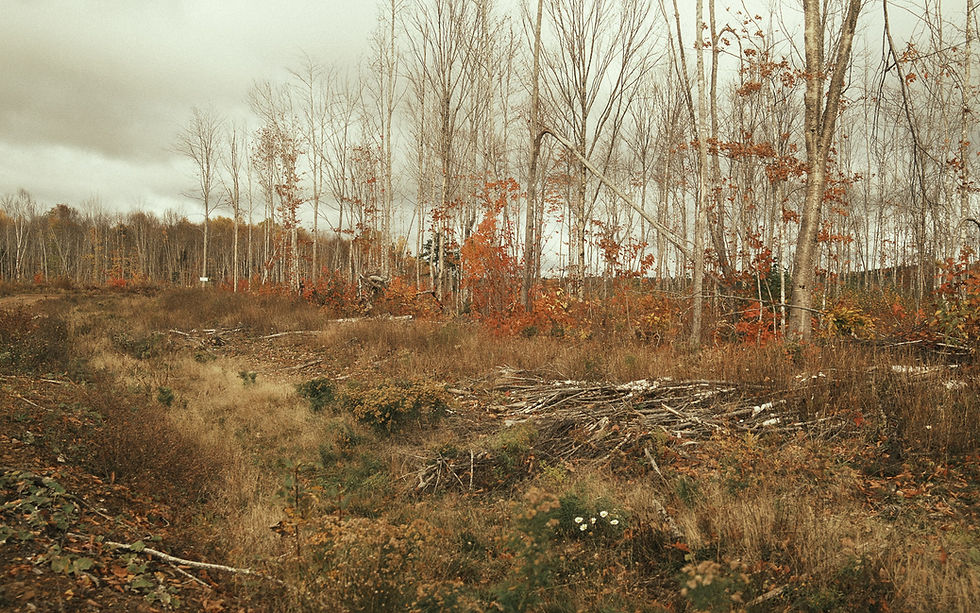
One of the primary objectives of the visit was to assess the results of the new tree marking prescriptions being applied in high-density maple stands located within the High Maple Potential Layer (HMPL).
A recently harvested stand was visited to discuss, among other things:
the preservation of maple production potential following harvesting;
the quality of the residual stand;
residual damage caused by harvesting operations;
the potential long-term impacts of these interventions on the future development of the maple industry.
The Association reiterated that forest management practices must not only maintain maple as a species, but also preserve the long-term capacity of these stands to support a sustainable and profitable maple industry. We also emphasized the importance of minimizing residual damage so that today's harvesting activities do not compromise future development opportunities.
Department representatives expressed their willingness to continue discussions and to monitor the results observed in the field.
The High Maple Potential Layer (HMPL) Remains an Evolving Initiative
Discussions confirmed that the HMPL, which currently covers approximately 9,400 hectares, is not a final or fixed exercise. The Department indicated that the layer will continue to evolve over time, with stands being added or removed as new information and analysis become available. This flexibility will allow for a more accurate representation of Crown land areas with strong potential for future maple development.
The Association continues to believe that several high-potential maple stands are not currently included in the HMPL. We will therefore continue working to ensure that the layer better reflects on-the-ground conditions and protects the most strategic areas for the future growth of our industry.
We encourage any members who are aware of Crown land maple stands that should be included in the HMPL to contact the Association's Interim Executive Director, Frédérick Dion. If possible, please provide a description of the area, its approximate location (or GPS coordinates, if available), and the reasons why you believe it should be added.
Conservation Areas
The visit also provided an opportunity to continue discussions regarding maple production activities within the various categories of conservation areas.
The Association recognizes the importance of allowing maple development in these areas where it is compatible with conservation objectives. However, the rules governing maple operations remain unclear and are often interpreted very restrictively, creating uncertainty for producers.
We also raised a significant concern: while major restrictions are imposed on maple development, forest harvesting activities continue to be permitted within some categories of conservation areas. The Association asked the Department to better explain this distinction and to ensure that management rules are applied consistently and in accordance with the same conservation objectives.
Department representatives acknowledged that several aspects require further clarification, and discussions will continue over the coming months to better define the activities and conditions applicable to maple development within these areas.
Next Steps
This field visit marks an important step in the ongoing dialogue between the Association and the Department of Natural Resources. It provided an opportunity to present producers' concerns firsthand, validate observations in the field, and identify areas that will require further work.
We thank the Board members who participated in the visit, as well as the Department representatives for their time and willingness to engage in constructive dialogue. The Association will continue its advocacy efforts to ensure that forest management practices evolve in a way that supports the long-term needs of New Brunswick's maple industry.


Comments